AL-Akhbar: Bomb attacks in mainly Shia Muslim neighborhoods in Iraq's capital
Baghdad and in the southern city of Nasiriyah killed at least 68 people and
wounded more than 100 on Thursday, AFP reported.
The worst incident saw
at least 45 people killed by a suicide attack on the outskirts of Nasiriyah as
pilgrims were walking to the shrine city of Karbala for Arbaeen commemorations.
"Hospitals in Nasiriyah have received 45 killed and 68 wounded," said
Hadi Badr al-Riyahi, head of the provincial health department in Dhi Qar, of
which Nasiriyah is the capital.
Arbaeen marks 40 days after the Ashura
anniversary commemorating the slaying of Imam Hussein, one of Shiite Islam's
most revered figures, by the armies of the Caliph Yazid in 680 AD.
In
Baghdad's northwestern Kadhimiya district, two car bombs killed at least 15
people and wounded 32 others, the sources said.
Another two bombs, one
planted on a parked motorcycle and another, also a roadside device, killed at
least 10 people and wounded 37 others in the impoverished Sadr City district in
northeastern Baghdad, they said.
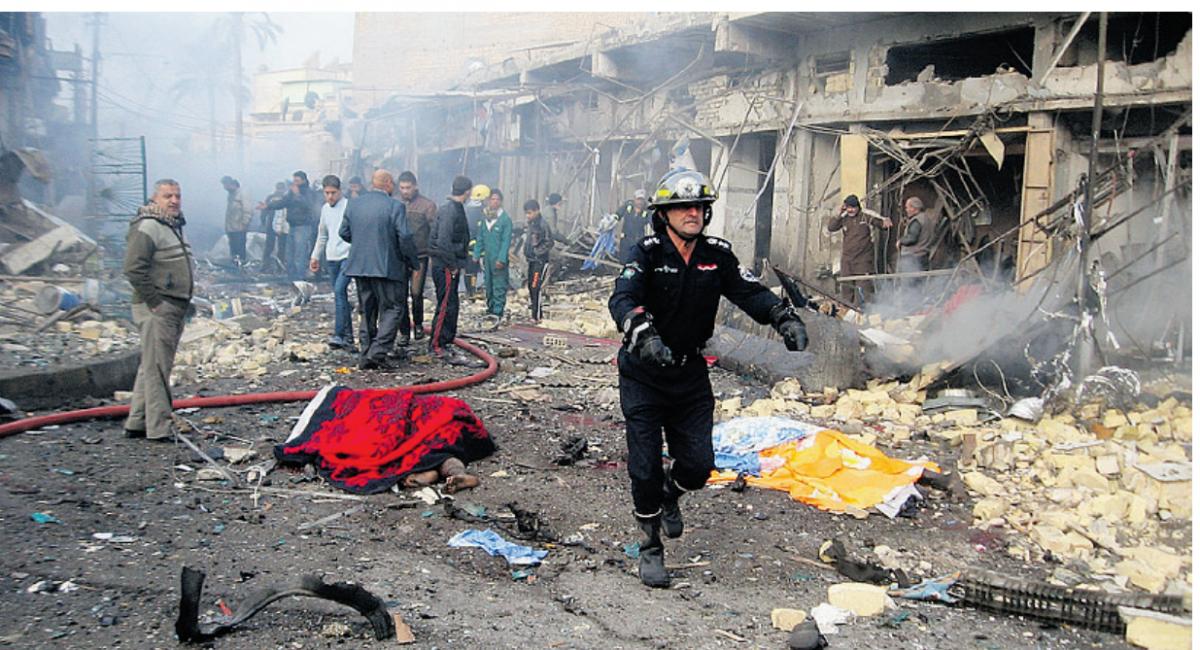
"There was a group of day laborers
gathered, waiting to be hired for work. Someone brought his small motorcycle and
parked it nearby. A few minutes later it blew up, killed some people, wounded
others and burned some cars," said a police officer at the scene, declining to
be named.
A Reuters reporter said there were blood stains all around the
site of the motorcycle bomb attack and that tarmac on the road had been ripped
up by the explosion. Building tools and shoes were scattered across the site.
"Political leaders fight each other for power, and we pay the price,"
said Ahmed Khalaf, a laborer who was near the site of attacks in the north
Baghdad neighborhood of Sadr City.
"How is it our fault if Hashemi is
wanted, or someone else is wanted? Why should we pay instead of them?"
Police said they found and defused two other bombs.
Sadr City is
a stronghold of Iranian-backed Shia cleric Moqtada al-Sadr, whose Mahdi militia
once fought US and Iraqi troops. He is now a key ally of Maliki.
Iraq is
still plagued by a deadly Sunni Muslim insurgency and Shia militias nearly nine
years after the US-led invasion that ousted Saddam Hussein.
Terrorist
attacks have accelerated in the weeks following the withdrawal of the last US
occupation troops in December.
A series of blasts on Wednesday targeting
the homes of police officers in Baqouba, northeast Baghdad, killed two children
while they slept. Al-Qaeda militants were suspected to have been behind the
attacks.
And a spate of bombings killed 72 people in mainly Shia areas
of Baghdad a few days after the political crisis began last month, deepening
fears of a return to sectarian strife in Iraq, which teetered on the brink of
civil war in 2006-7.
The attacks in recent weeks have targeted Sunni
tribes opposed to Al-Qaeda, security personnel, as well as Shia neighborhoods,
suggesting that extremists are attempting to exploit the current political
crisis and inflame sectarian strife.
Shia Prime Minister Nouri al-Maliki
angered rivals when he asked parliament to have his Sunni deputy Saleh al-Mutlaq
removed for labeling Maliki's rule a "dictatorship," and sought an arrest
warrant for Sunni Vice President Tariq al-Hashemi on charges he ran death
squads.
Hashemi's bodyguards confessed in tapes aired on Iraqi
television to planning and carrying out attacks aimed at undermining Maliki's
leadership.
On Tuesday, members of the Sunni-backed Iraqiya bloc
boycotted Iraq's parliament and cabinet, accusing Maliki's bloc of governing
alone in a power-sharing coalition that was supposed to ease sectarian tensions.
The inclusion of Iraqiya in the governing coalition was widely
considered crucial to prevent a return to the kind of sectarian violence that
was unleashed and fanned by the 2003 US-led invasion. Thousands were killed in
the violence.
But current political friction is threatening to
destabilize Iraq, an opportunity seized upon by militants seeking a sectarian
conflict.
The threat of violence is heightened by the involvement of
regional rivals Iran and Saudi Arabia, each vying for greater influence in Iraq.
http://www.vancouversun.com/news/String+targeted+bombings+Iraq+kill/5955271/story.html
String of targeted bombings in Iraq kill 73
Triggered by ouster of Sunni politicians
The biggest attack was beside a police checkpoint west of Nassiriya in the south, where a suicide bomber targeting Shia pilgrims killed 44 people and wounded 81, said Sajjad al-Asadi, head of the provincial security committee in Nassiriya.
Read more:
http://www.canada.com/news/String+targeted+bombings+Iraq+kill/5955271/story.html#ixzz1iho20jlNRead more:
http://www.canada.com/news/String+targeted+bombings+Iraq+kill/5955271/story.html#ixzz1ihnUJdQy



 Posts
Posts


